
Getting Around South Korea: Trains, Buses, and Which One You Actually Need
Getting around Korea is easier than it looks. High-speed trains can help you get between major cities, while intercity buses can help you reach more destinations at a lower cost. If you’re looking to add Jeju to your itinerary, domestic flights from airports like Gimpo offer plenty of options. Transit cards like T-Money and EZL allow you to access subways and buses in almost every city in Korea. If you’re a first-time visitor, you don’ t need to rent a car in almost every instance.
1. Before you go — apps, cards and payment
Google Maps has been locked out of Korean map data for years. Some of those restrictions have started to lift, but the change is slow — when I tested it recently it planned routes around Seoul fine, then refused to give me walking or driving directions.
Download Naver Map (네이버 지도) or KakaoMap (카카오맵) instead. Locals use both. I use Naver Map and find it handles English input better; plenty of people will tell you the opposite, and either one will get you there.
For translation, get Papago (파파고). It does a better job with Korean than Google Translate, and the camera mode handles menus and signs well enough to order from. The voice mode is fine for basic back-and-forth. I have also tried the live translation on my S26 Ultra, which works with some delay on the listening side.
One last thing before you fly: save your hotel name in Korean, and the full address too if you are staying in an Airbnb or a smaller guesthouse. You will need to show it to a taxi driver at some point, and "the Marriott" is not as universal as it sounds.
You will also want data from the moment you land, because none of these apps are useful without it — that is covered in the connectivity guide.
Practical info
- T-money or EZL card — ₩2,500–₩5,000 at any convenience store, loaded with cash
- Subway — ₩1,550 for the first 10 km, then ₩100 per additional 5 km
- Local bus — ₩1,200–₩3,000 depending on the type of bus
- Apps — Naver Map or KakaoMap, Papago, Korail+, Kakao T
- Payment — cards work almost everywhere; carry cash for T-money top-ups and street vendors
- Prices checked August 2026
Planning your first trip to Korea?
Download the Seoul First-Timer's Checklist so you have the transport apps, arrival information and essential trip details ready before you fly.
Send it to me2. Between cities by train
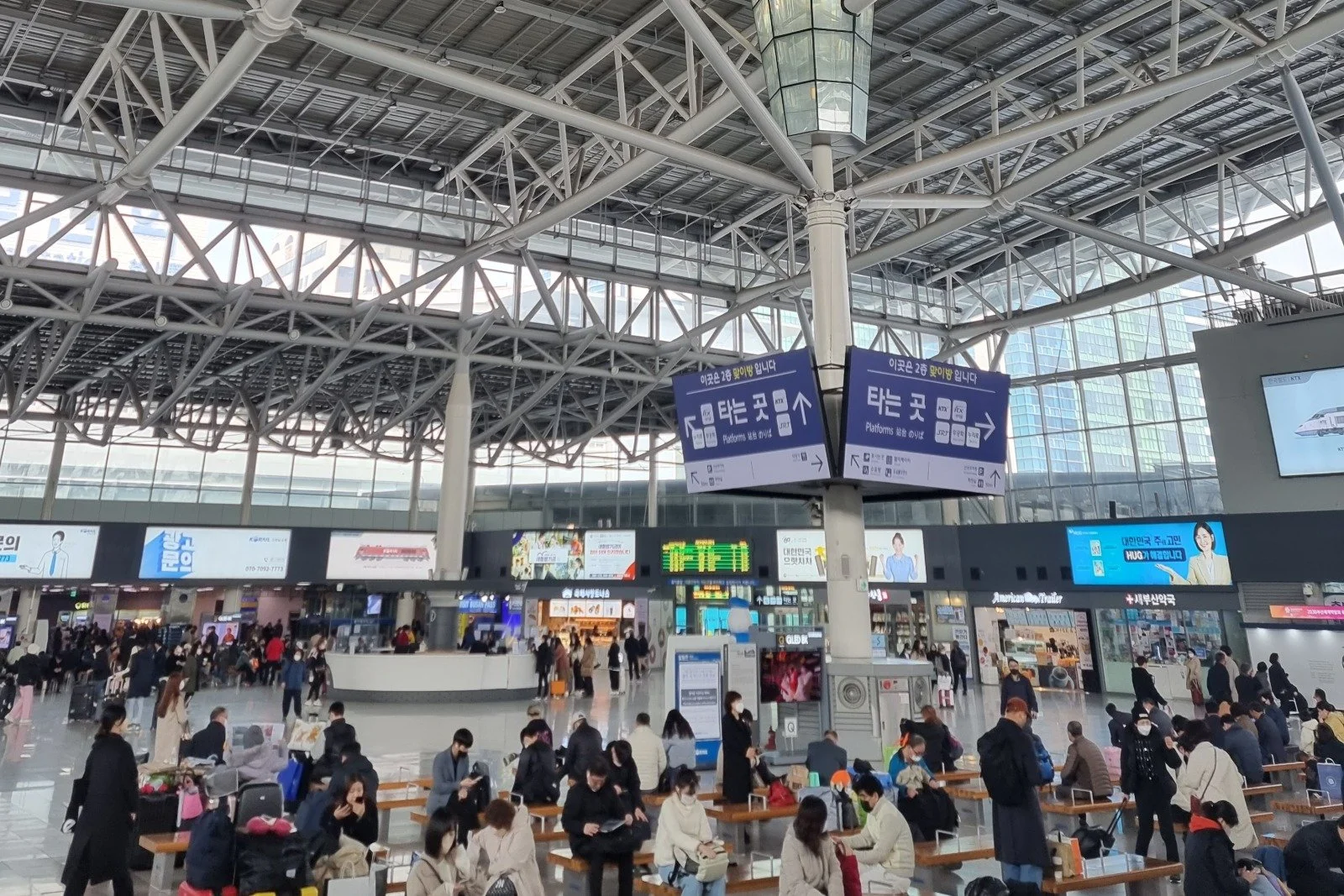
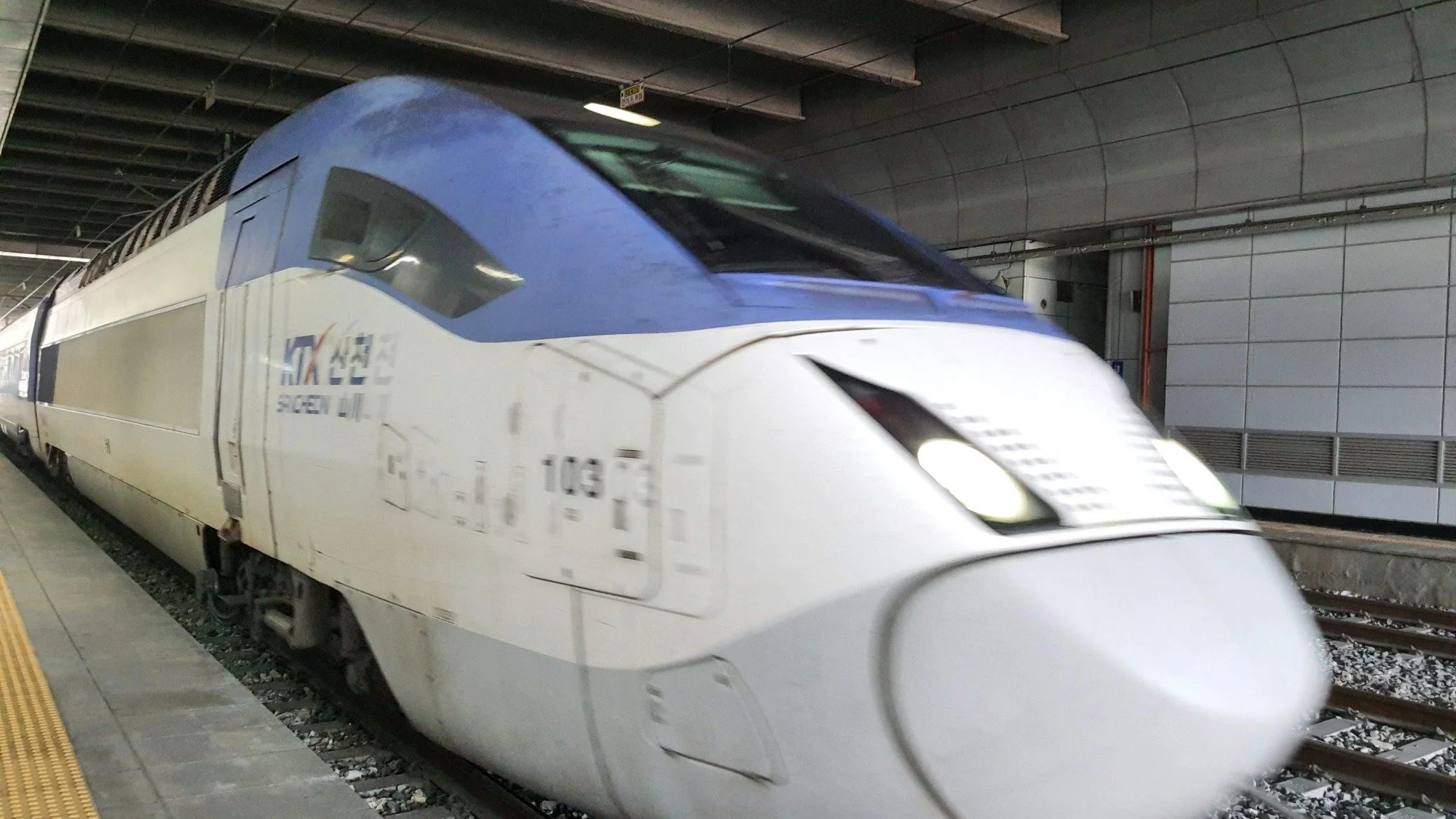
There are four train types worth knowing. KTX and SRT were the two high-speed services, running on separate systems with separate booking apps. As of 3 August 2026 they have merged into the new Korail+ app, and SRT trains have been renamed KTX-Sancheon. Below those, ITX trains are the intercity express services and Mugunghwa (무궁화) trains are the slower, cheaper standard option. If you are heading somewhere rural, it will usually be Mugunghwa or a bus, because KTX does not stop there.
When the high-speed train is the right call. Long distances between major cities — Seoul to Busan, Daegu, Mokpo or Gwangju. High-speed service roughly halves the journey, and the fastest Seoul–Busan run is about two and a half hours. You get proper legroom, power outlets, free wifi and luggage racks.
How to buy tickets. The Korail+ app is an enormous improvement on what came before, and it was built with foreign visitors in mind. I installed it on a new phone recently and it defaulted to English; you can also switch to Japanese, Chinese, Vietnamese, Thai, Indonesian and several others. It takes foreign credit cards, seat selection is straightforward, and as a tourist you can book without an account — just an email address and a six-digit password to open your ticket.
If you would rather not install anything, the official Korail website works much the same way and also accepts foreign cards.
Book ahead if you are travelling on a weekend or a holiday. Tickets sell out for popular departure times, and it gets worse when a red day falls on a Friday or Monday — most offices and schools are closed and families travel. The booking window opens 30 days out.
If you buy at the station, go to a ticket agent rather than a kiosk; many kiosks only take domestic cards and some will not take cash either. If your train is sold out, ask for a standing ticket — it is discounted, has no assigned seat, and lets you ride in the communal space between cars.
Heads up
Do not book Korean train tickets through Rail Ninja. It is not the operator and not an authorised reseller, and the markup runs to more than double the real fare. The real problem is availability: Korail only sells 30 days ahead, with special windows around Chuseok and Seollal, but Rail Ninja will happily take your money two or three months out and let you believe a seat is reserved when it is not. If you want a third party, use Klook or Trip.com — they charge $1–2 in fees and issue official QR tickets.
Insider tip
You do not always want the KTX. On a day trip to Suwon the Mugunghwa is only a few minutes slower and about 75% cheaper. And for Gyeongju, take the bus — Gyeongju Station sits outside the centre, while the bus terminal drops you near the historical sites.
Check which station you are leaving from. This is the tip that saves the most people. Tickets list the station name, and Seoul has several — Seoul Station (서울역), Yongsan (용산역), Suseo (수서역) and Cheongnyangni (청량리역). "Seoul" on your ticket means Seoul Station specifically.
If you have a checked-size bag, arrive early. There is space above the seats for small luggage, but the larger racks are first come, first served.
3. Between cities by bus
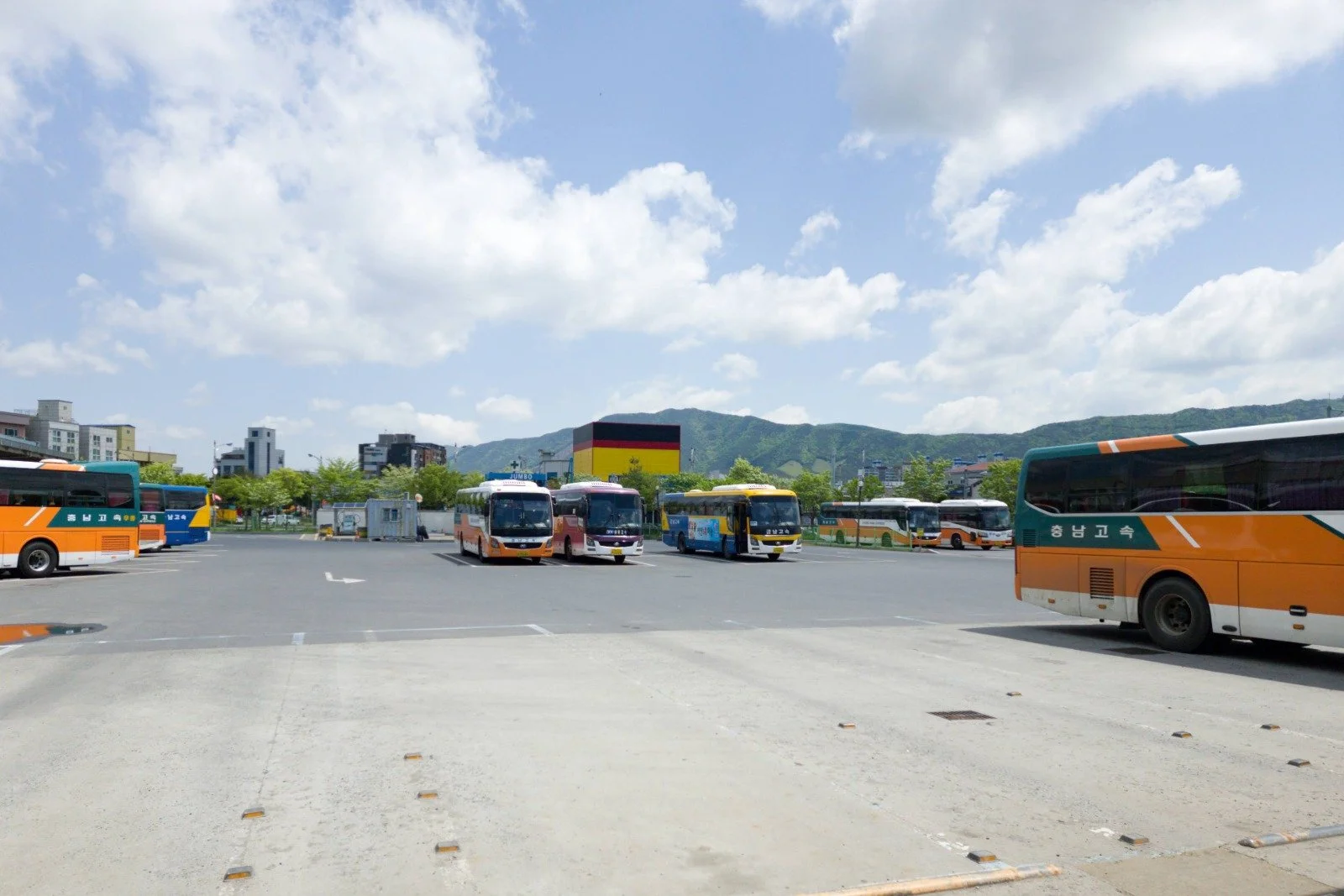
Buses split into two kinds. Express buses run the longer routes between major cities with fewer stops. Intercity buses serve smaller cities, counties and towns, and they are how you reach most rural Korea. Depending on the town, the two may leave from entirely separate terminals.
When the bus beats the train. Plenty of places have no rail station at all. Bus terminals also tend to sit closer to city centres and historical areas, so you transfer less once you arrive. Luggage goes underneath, some buses take bikes when there is room, and anything over about three hours stops at a rest area for ten minutes for a bathroom and a snack. If it is urgent, you can ask the driver to stop. Buses are cheaper than the equivalent train, and the premium options are genuinely comfortable.
Booking. The easiest way is at the terminal itself. Booking online with a foreign card has historically been painful, though Kobus — which runs the express network — has updated its site to handle foreign cards better, and the T-money GO app links through to it. I still get timeout errors trying to reach the site from the US, so you may need a VPN or you may simply have to wait until you land. The booking window is much shorter than for trains, opening one to two weeks out.
Klook also sells express bus tickets on popular routes, which is the better option if you need to lock something in early. Worth doing for the Gangwon-do beaches — Sokcho and Yangyang sell out well ahead on Friday and Sunday afternoons and around Chuseok and Seollal.
4. When a domestic flight makes sense
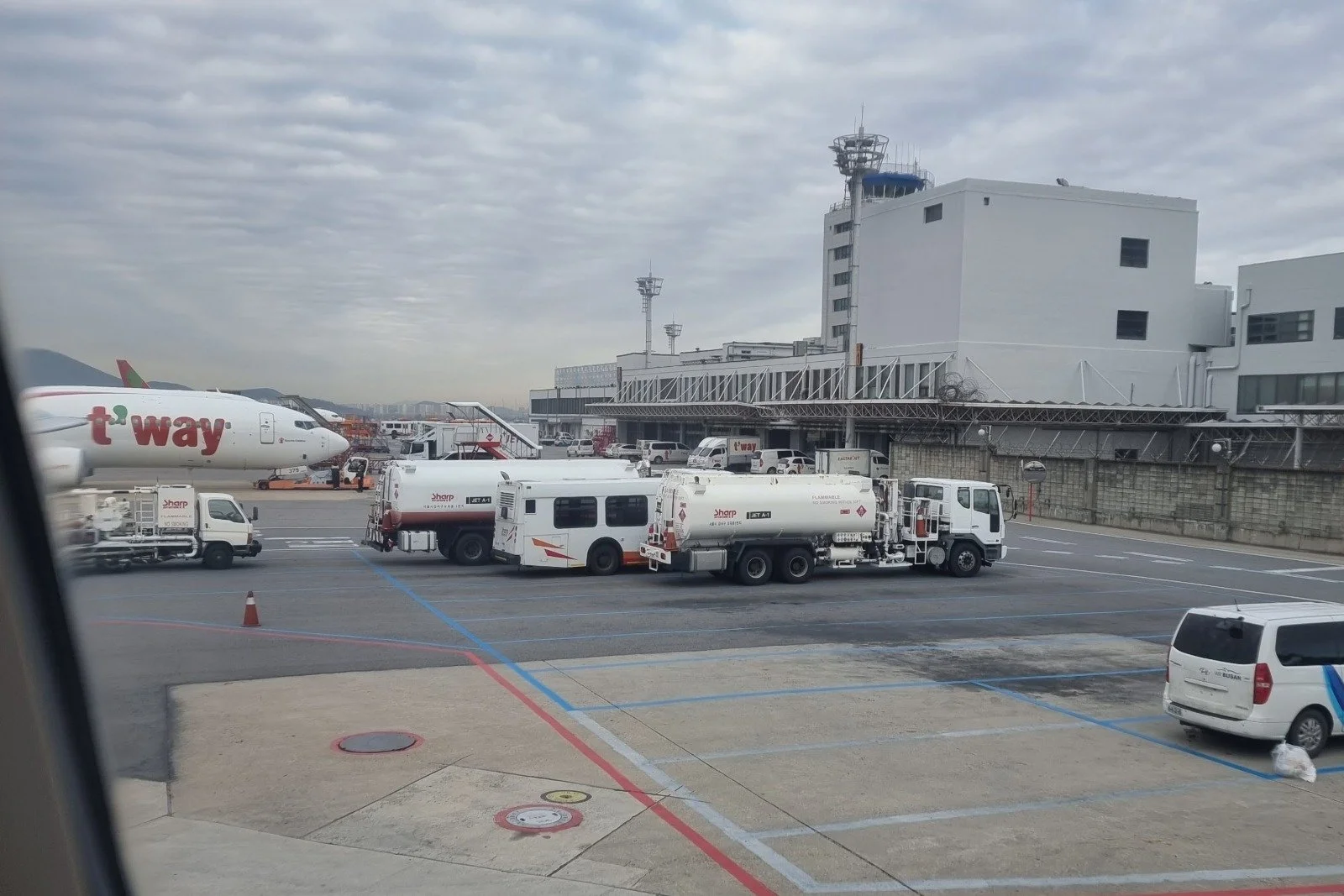
For Jeju, fly. Departures from Gimpo (김포) are frequent and cheap, and the alternative — the ferry from Mokpo — is long and inconvenient. Build in some slack for weather delays on the Jeju end, which are common enough to matter if you have a connection.
Busan is the other route people consider, and tickets are sometimes cheaper than the KTX. Compare the whole door-to-door journey rather than the hour in the air, though: Busan's airport is actually west of the city in Gimhae (김해), and getting from there to your hotel can add another 30 to 60 minutes. Once you add check-in and security to that, the train is often the faster option in practice.
5. Transit cards and how you pay
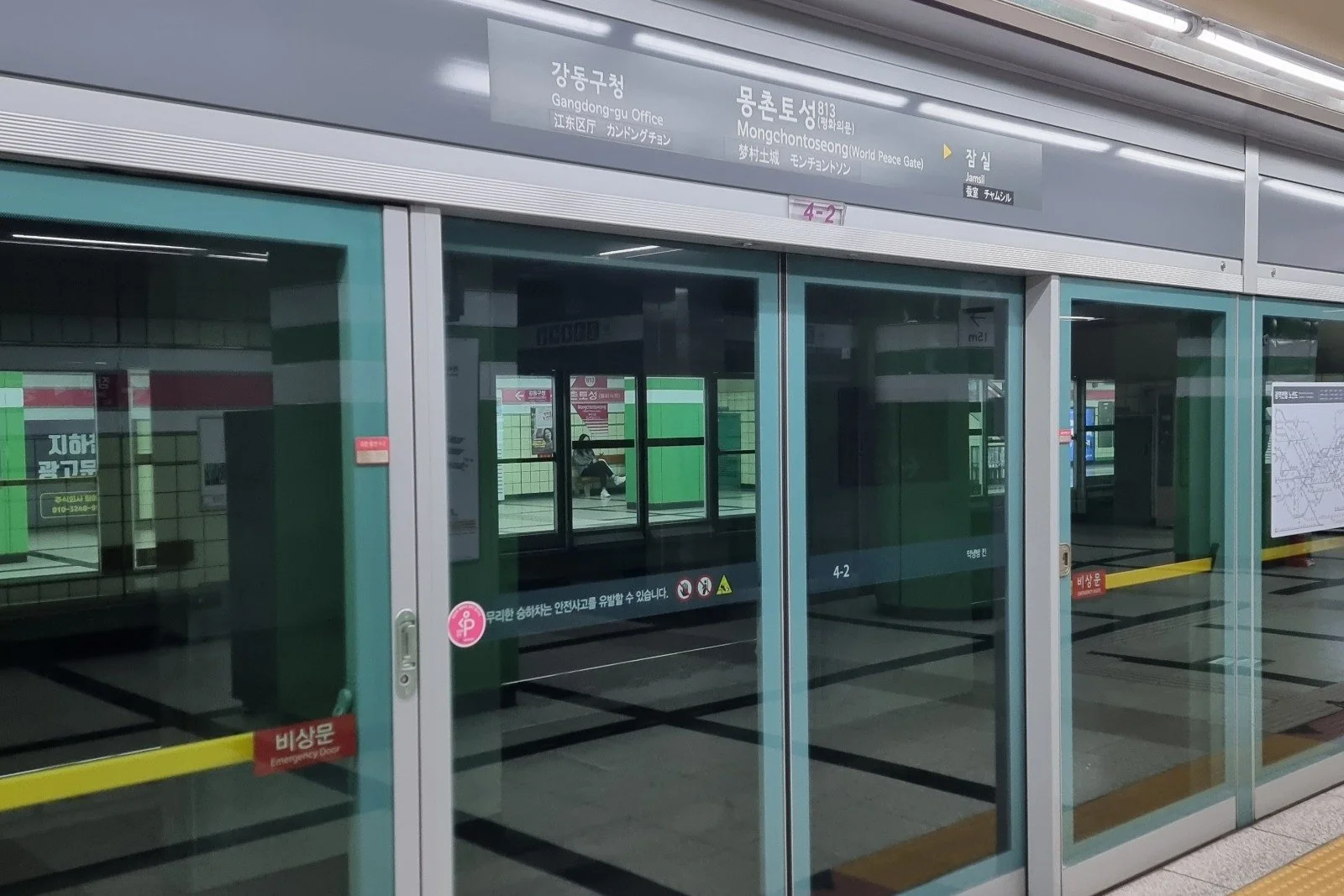
T-money (티머니) and EZL are the simplest option. Buy one at a convenience store — GS25, 7-Eleven or CU — for ₩2,500 to ₩5,000 depending on the design, load it with cash, and tap. It works on subways and local buses in almost every city in the country, which means the card you buy in Seoul works in Busan too.
Reloading is done with cash at convenience stores. Some of the larger subway stations have upgraded machines that take foreign cards, but do not count on it.
If you want one card that also pays for things, look at Namane or WowPass. Both hold a payment balance and a transport balance separately, topped up through their app with your own bank card or at one of their kiosks. WowPass kiosks also exchange foreign currency, which is useful if your card charges foreign transaction fees.
Practical info
When riding the subway or bus, you need to tap once when you get on and once when you get off. When you tap off, you have up to 30 minutes to transfer to a different subway line or bus for free.
6. Suggested transportation
Seoul and Busan — train between the two, then subway and local transit in each.
Seoul, Gyeongju and Busan — train or bus to Gyeongju, local bus or taxi around the sites, then bus or train onward to Busan.
Seoul and Jeju — fly from Gimpo, then local bus, taxi or a rental car on the island.
Seoul plus somewhere smaller — train to the nearest major city, then an intercity bus for the last leg.
If it’s your first time in Korea, you don’t need to rent a car to visit most of the places on people’s itineraries. Renting a car in Jeju can allow you to explore more of the island in a shorter amount of time but isn’t necessary to enjoy your trip. Taxis are cheap enough and public transportation is still an option in rural areas. In the seven years I’ve lived in Korea and traveled to countless rural destinations, I’ve never once rented a car.
If you decide to rent a car, you need to have a physical International Driving Permit from your country that your driver’s license is from. You also have to take into account parking. Most parking lots are automatic and only accept Korean payment cards and WowPass and Namane might not work. Tolls and traffic are another thing to consider and most rental places limit one-way rentals.
If you want to experience rural areas but don’t want to rely on public transportation, there are several travel agencies in Korea that specialize in providing trips for foreign visitors. You can find them advertising their trips on Instagram and I’ve personally gone on trips with groups like Korea Travel Mate. I’ve partnered with them in the past on trips but they aren’t paying me to promote them. I’ve really enjoyed going on rural trips with them and they handle the transportation, meals, and accommodations in addition to several experiences. Some of the accommodations can be a different experience and often times you will be roomed with other strangers (separated by gender) in communal rooms. Most of these trips are partially sponsored by the government so the trips are pretty affordable with some under ₩10,000 and most under ₩30,000.
Common questions
Is it better to take the train or the bus from Seoul to Busan?
Take the train. The fastest KTX does it in about two and a half hours against roughly four and a half by bus, and both stations sit centrally. The bus is worth it only if the train is sold out or you are travelling on a tight budget, where the saving is real but so is the time.
Can I use the same transit card in Seoul and Busan?
Yes. A T-money or EZL card bought anywhere in Korea works on subways and local buses in almost every city, so one card covers your whole trip. Keep it topped up with cash — reloading is easiest at convenience stores, and not every station machine will take a foreign card.
Should I buy train tickets before arriving in Korea?
Only for weekends and holidays. Korail sells 30 days ahead, and popular departures around Chuseok, Seollal and long weekends do sell out. Outside those, booking a day or two before is fine. Book through the Korail+ app or the official Korail site, never through a reseller quoting availability months out.
Do I need a car to travel around Korea?
No, not for a normal first trip. Trains and buses reach almost everywhere, and taxis fill the gaps cheaply outside the big cities. A rental makes sense on Jeju or for a rural road trip, and it requires a physical International Driving Permit from your home country plus some patience with parking and tolls.
Get ready for your first trip to Korea
Download the Seoul First-Timer's Checklist and arrive with the essential apps, transport information and arrival steps already organised.
Send it to me